How to Prepare for Long Haul Flights Comfortably
- 5 days ago
- 6 min read
The difference between arriving ready to explore and arriving desperate for a shower, a nap and a quiet room is usually decided before you board. Knowing how to prepare for long haul flights means planning beyond your suitcase: think seat comfort, sleep strategy, hydration, airport timing and what you will actually need within arm’s reach for the next eight to 14 hours.
A little preparation will not turn economy into a boutique hotel, but it can make a night flight far more manageable and give you a better first day in a new city. Here is how to make the journey feel like part of the holiday rather than an obstacle to get through.
How to Prepare for Long Haul Flights Before You Leave
Start with the practical details a few days ahead, not while you are rushing to the airport. Check your passport validity, visa or entry requirements, airline baggage allowance and any destination-specific health guidance. Save copies of key bookings and travel documents to your phone, but keep essential details accessible offline too. Airport Wi-Fi and mobile data are not always reliable when you need them most.
Check in online as soon as it opens. This gives you the best chance of choosing a seat that suits the way you travel. A window seat is usually best for sleepers because you will not need to move for other passengers and can lean against the side of the aircraft. An aisle seat offers more freedom to stretch your legs and visit the loo without disruption. For very tall travellers, an exit-row seat can be worth paying for, though some airlines restrict these seats for passengers travelling with infants or those who may not be able to assist in an emergency.
If your flight includes a connection, leave enough time to transfer comfortably. A bargain itinerary with a 55-minute connection can quickly become stressful if your first flight is delayed or you need to clear security again. For a long-haul trip, a slightly longer layover often pays off in calmer nerves and a proper meal.
Build a Carry-On That Works Hard
Your checked bag is for clothes and larger items. Your cabin bag should contain everything you need if your suitcase is delayed, plus the items that make the flight more comfortable. Keep it organised in a way that avoids repeatedly emptying it into the footwell.
Pack these essentials in a smaller personal bag that stays under the seat in front of you:
Passport, wallet, boarding pass, phone, charger and any required travel documents
Medication, a basic painkiller, hand sanitiser and a few plasters
A reusable water bottle to fill after security, plus snacks you know you will enjoy
Headphones, charging cable, power bank and downloaded entertainment
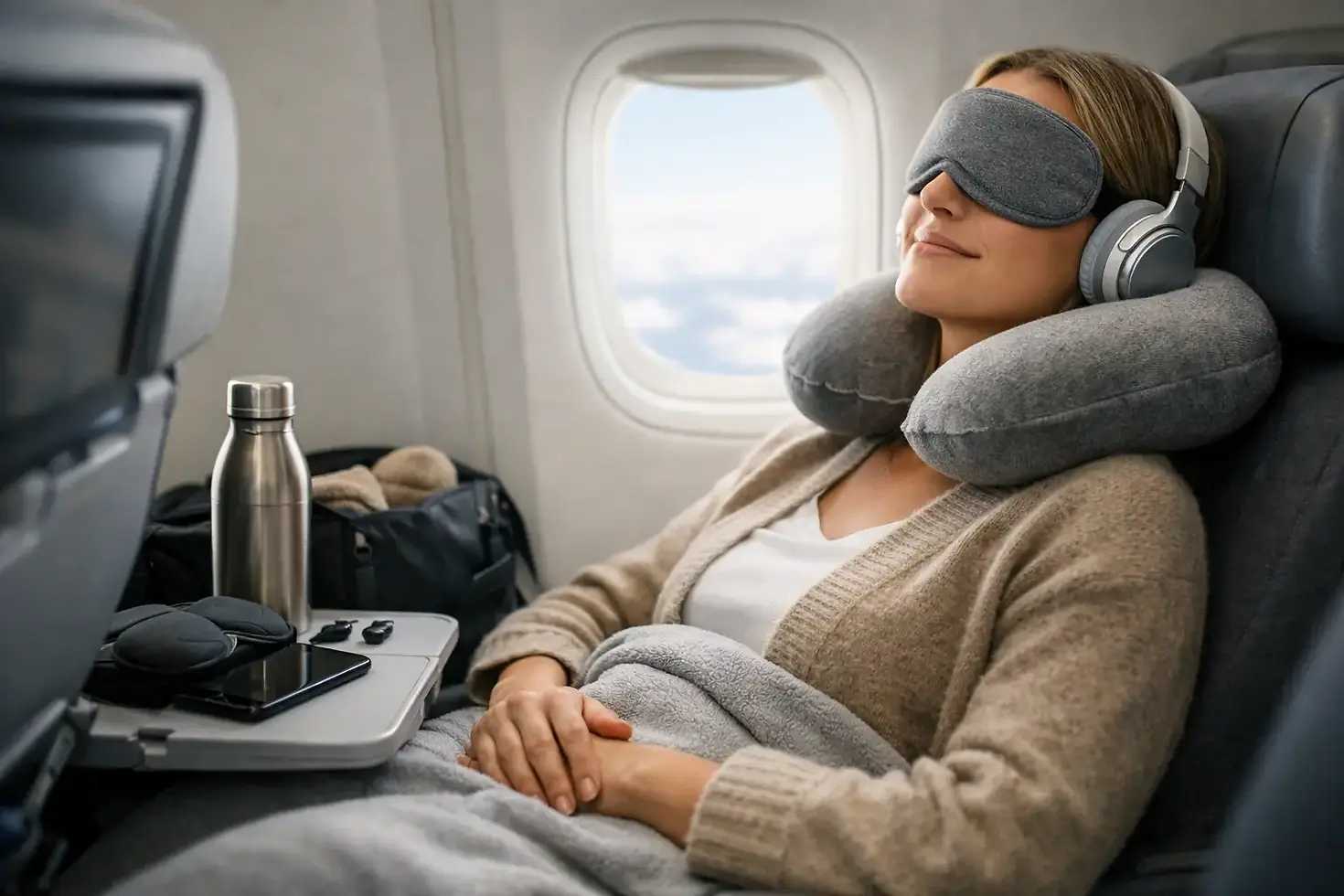
A sleep kit with an eye mask, earplugs or noise-cancelling headphones, and a neck pillow if you use one
A fresh T-shirt, underwear, toothbrush, toothpaste and travel-sized deodorant
The fresh-clothes point is easy to overlook, but it makes a noticeable difference after an overnight flight or before a connection. Keep liquids within airport security limits and place them where they are easy to remove. A spare outfit is also sensible if you are travelling somewhere with a sharply different climate from home.
Avoid bringing too much. The best long-haul hand luggage is light enough to lift into an overhead locker without a struggle. A bulky bag can make an already cramped seat feel even smaller.
Dress for the Cabin, Not the Departure Lounge
Cabin temperatures can swing from warm during boarding to chilly once the aircraft is in the air. Wear soft, breathable layers that can be added or removed easily. A lightweight jumper, cardigan or overshirt is more useful than one heavy coat, while loose trousers or leggings are generally more comfortable than restrictive jeans for a long sitting session.
Choose socks and shoes you can slip off and put back on easily. Compression socks are worth considering if you are prone to swollen ankles, pregnant, or have been advised to use them by a medical professional. They are not essential for every traveller, but they can be a simple comfort upgrade on flights lasting many hours.
Skip anything that digs in at the waist, needs constant adjustment or makes it difficult to move around. Comfort is the priority, but you can still arrive looking put together with neutral layers and clean trainers or loafers.
Plan Your Sleep Around the Destination
Sleep is often the hardest part of a long-haul flight, particularly when you are crossing several time zones. The aim is not necessarily eight perfect hours. It is to arrive with enough rest to enjoy your first evening and begin adjusting to local time.
Look at your destination’s time before you fly. If it will be night there for most of your flight, try to sleep after the first meal service. Change your watch or phone clock to the local time once you board, then let that guide when you eat, watch films and rest. If you land in the morning, resist the temptation to sleep all afternoon if you can. A short nap can help, but staying awake until a reasonable local bedtime will usually help reset your body clock faster.
A neck pillow is personal preference rather than a universal essential. Some travellers love structured memory-foam designs, while others prefer a simple inflatable option that takes up little space. An eye mask and earplugs are more universally useful, especially when fellow passengers are watching films or the cabin lights come on early.
Be cautious with alcohol and sleeping tablets. Alcohol can make you drowsy but often disrupts quality sleep and leaves you more dehydrated. Sleep medication is not the right choice for everyone and may leave you groggy when you need to navigate immigration or a new airport. If you are considering it, speak to a healthcare professional before travelling.
Eat, Drink and Move With Intention
Flying is dehydrating, and jet lag can make it tempting to rely on coffee, wine and sugary snacks. Enjoy the meal service if it appeals, but do not expect it to carry you through the journey. Bring a few familiar snacks such as nuts, protein bars, crackers or dried fruit, particularly if you have dietary requirements or are travelling with a tight connection after landing.
Drink water regularly from take-off onwards. You do not need to overdo it, but small, steady amounts are better than trying to catch up when you have a headache. Limit alcohol, especially on overnight flights, and use caffeine strategically. A coffee at the start of a daytime flight may help you stay awake, while a large one close to your planned sleep window can make settling down harder.
Move whenever it is safe to do so. Stretch your calves and ankles in your seat, stand up every few hours and take a short walk to the galley if the seatbelt sign is off. This helps with stiffness and circulation, and breaks up the strange sense of time that can set in on a very long journey.
Make the Airport Experience Easier
Long-haul flights already demand patience, so remove avoidable friction at the airport. Aim to arrive with enough time for bag drop, security and the walk to your gate without needing to sprint through the terminal. For most international departures, arriving around three hours early is a sensible baseline, but always follow your airline’s guidance and allow extra time during school holidays or peak travel periods.
Eat a proper meal before boarding if you have time. Airline food can be perfectly adequate, but it may be served at an inconvenient hour or not suit your appetite. If you have lounge access, it can be a comfortable place to recharge devices, refill water and start winding down. If not, find a quieter gate area, download any last-minute entertainment and keep an eye on boarding announcements.
Before you step onto the aircraft, visit the loo, fill your water bottle and put your most-needed items in one easy-to-reach pouch. Once boarding begins, you will be glad not to be searching through your bag while the aisle is crowded.
Set Yourself Up for a Better Arrival
The final hour of the flight is your chance to reset. Freshen up, brush your teeth, apply moisturiser or lip balm, and change into your spare top if it helps you feel more awake. Complete arrival forms before landing if they are provided, and make sure your passport, accommodation details and onward travel plan are easy to access.
If you are landing early in the day, plan something low-pressure for your first few hours: leave bags at your hotel, take a walk, have lunch somewhere relaxed or visit one nearby sight. Booking an ambitious museum marathon or a long drive immediately after a red-eye flight can turn excitement into exhaustion.
The best preparation is not about buying every travel accessory on the market. It is about creating a small routine that makes you feel comfortable, rested and in control. Arrive with your essentials close by, give yourself permission to take the first day gently, and you will be ready to enjoy the destination that much sooner.



Comments