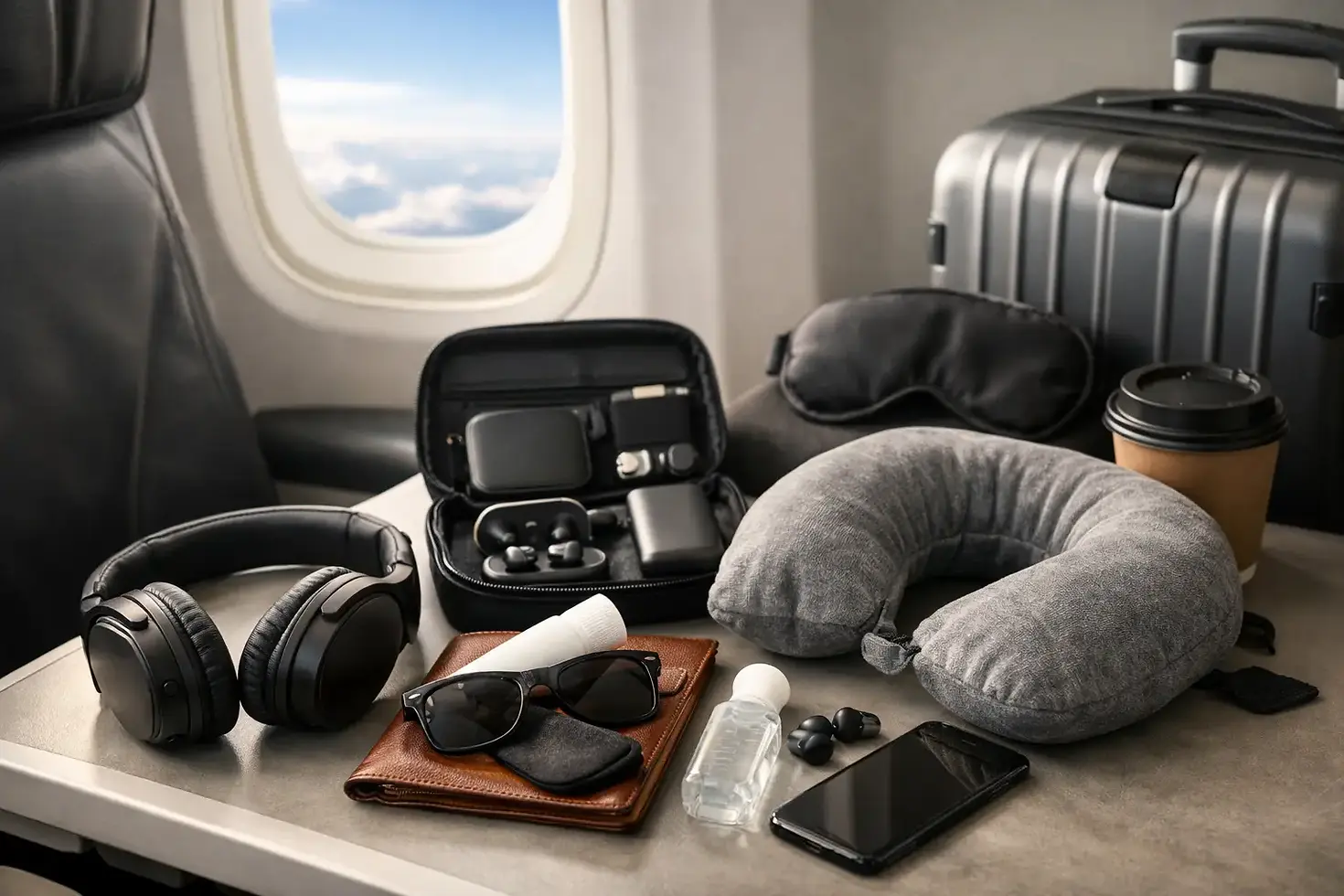
15 Travel Essentials for Long Flights
- 2 days ago
- 6 min read
A long-haul flight can turn exciting trip plans into a test of patience before you have even landed. The right travel essentials for long flights make a real difference - not just to comfort, but to sleep, hydration, and how human you feel when you step off the plane.
Some travellers pack as if the cabin crew will provide everything. Others fill a carry-on with half their bedroom and still forget the one thing they actually need. The sweet spot sits in the middle: a few well-chosen items that earn their space in your bag and help the hours pass more comfortably.
Why travel essentials for long flights matter
On a short flight, you can tolerate a slightly awkward seat, dry cabin air, or a dead phone battery. On a seven, ten, or fourteen-hour journey, those little annoyances start to stack up. A poor setup can leave you stiff, thirsty, tired, and oddly irritable before your holiday or work trip has properly started.
That is why smart packing matters more than overpacking. The best essentials are not necessarily expensive or trendy. They are the items that solve common long-flight problems: poor sleep, noise, dehydration, boredom, and awkward access to your most-needed bits once your main bag is stowed away.
The best travel essentials for long flights
1. A supportive neck pillow
A decent neck pillow is still one of the most useful in-flight upgrades. The goal is not luxury for the sake of it. It is proper support, especially if you tend to nod forward or wake up with a stiff neck.
Memory foam styles are popular for a reason, but they do take up space. Inflatable versions are easier to pack and can work well if you do not mind a slightly less plush feel. If you are trying to travel light, this is one of those choices that depends on how well you sleep upright.
2. Noise-cancelling headphones or good earplugs
Aircraft cabins are rarely quiet. Between engine noise, chatty neighbours, meal service, and the occasional crying baby, rest can be harder than expected. Noise-cancelling headphones help create a calmer bubble, whether you are watching films, listening to music, or simply trying to switch off.
If you do not want to spend on headphones, a comfortable pair of earplugs still earns a place in your personal item. For many travellers, this is one of the highest-impact swaps they can make.
3. An eye mask that actually blocks light
Cabin lights, entertainment screens, and early breakfast service are not ideal if you are trying to sleep. A soft eye mask can help far more than people expect, especially on overnight routes.
Look for one that sits comfortably without pressing too hard around the eyes. Cheap options can do the job, but flimsy elastic and scratchy fabric become annoying after a few hours. This is one of those small details that can shape the whole flight.
4. A refillable water bottle
Long flights are dehydrating, full stop. Cabin air is dry, and relying only on small cups of water during service is rarely enough. Bringing a refillable bottle gives you more control over your intake and saves you from waiting for the next drinks trolley.
Just make sure it is empty before security, then fill it once you are airside. A lightweight bottle works best, and if it fits neatly in your seat pocket or under-seat bag, even better.
5. Lip balm and a small moisturiser
You do not need a full skincare routine at 35,000 feet, but dry skin and lips can become uncomfortable surprisingly quickly. A basic lip balm and travel-sized moisturiser are practical rather than indulgent.
If you wear contact lenses, this matters even more. Dry cabin air can leave your whole face feeling tight, especially on overnight journeys. Keep liquids within the rules and pack them where you can reach them easily.
6. Compression socks
Compression socks are not the most glamorous travel purchase, but they are worth considering for longer flights. They can help with circulation and reduce some of that heavy-legged, swollen-ankle feeling after sitting for hours.
They are especially useful for overnight routes, taller travellers, and anyone who tends to feel stiff during long periods of sitting. You do not need hospital-style kit - just a comfortable pair designed for travel.
7. A roomy carry-on organiser or pouch
One of the easiest ways to make a long flight feel chaotic is to scatter your essentials across multiple bag pockets. A simple organiser pouch keeps your most-used items in one place: passport, charger, lip balm, headphones, pen, tissues, and anything else you will want mid-flight.
This is less about aesthetics and more about convenience. When the cabin lights are low and the person beside you is asleep, rummaging around at your feet loses its charm quickly.
8. Portable charger and charging cable
Seat-back power is helpful when it works. It does not always work. A portable charger gives you backup and removes the stress of rationing battery life across your phone, wireless earbuds, or tablet.
Choose one that is airline-compliant and fully charged before you leave home. If your phone is also your boarding pass, map, hotel confirmation, and entertainment hub, this is not the item to skip.
9. Downloaded entertainment
Even if your airline offers a strong entertainment system, it is still worth downloading your own films, series, podcasts, playlists, or reading material. Screens fail, options can be underwhelming, and sometimes you just want your own comfort viewing.
A tablet or phone loaded in advance can make a huge difference, especially if you are not great at sleeping on planes. Think of it as insurance against boredom.
10. Healthy snacks
Airline meals vary wildly. Some are perfectly fine, others are forgettable, and timing is not always ideal. Packing a few snacks means you are not fully dependent on what is served and when.
The best choices are easy to carry and not too messy - nuts, oat bars, dried fruit, crackers, or something with a bit of protein. If you are arriving late or have a long transfer, those snacks can be just as useful after landing.
11. Hand sanitiser and tissues
These are not exciting, but they are always useful. Tray tables, armrests, and seat pockets are not exactly pristine, and a small bottle of hand sanitiser comes in handy before meals and after bathroom trips.
Tissues are equally practical for everything from spills to blocked noses to impromptu clean-up duty. They take up almost no room, which makes them an easy yes.
12. A light layer or oversized scarf
Cabin temperatures are unpredictable. One flight feels stuffy, the next feels like the air con is set for midwinter. A lightweight jumper, zip-up layer, or large scarf helps you adapt without digging into your overhead bag.
An oversized scarf is particularly useful because it can work as a blanket, lumbar support, or an extra layer around your shoulders. For travellers trying to pack smart, versatility matters.
13. Slip-on shoes
Comfort starts before take-off. Shoes that are easy to remove and put back on make security, settling in, and mid-flight stretching much easier. On a long route, your feet may swell slightly, so rigid footwear is rarely your friend.
That does not mean sacrificing style entirely, but long-haul travel is one of those moments where practicality usually wins.
14. A toothbrush and a few mini toiletries
If you have ever brushed your teeth before landing on an overnight flight, you already know how much better it makes you feel. A tiny dental kit, deodorant, and perhaps a face mist or cleansing wipe can help you reset before arrival.
This is especially useful if you are landing in the morning and heading straight into sightseeing, meetings, or onward travel. You do not need a full washbag - just the basics that make you feel refreshed.
15. Any medication you might need
This one is easy to overlook until it matters. Keep essential medication, pain relief, plasters, and anything time-sensitive in your hand luggage, not your checked case.
If you are prone to headaches, motion sickness, or dry eyes, plan for that before boarding. The best in-flight setup is the one that prevents small problems from becoming a very long seven-hour inconvenience.
How to choose what is worth packing
Not every traveller needs the same kit. If you sleep anywhere, your list might be short. If you struggle on flights, the right extras are worth every centimetre of bag space. The trick is to pack for your actual habits, not for an idealised version of yourself who journals neatly, drinks herbal tea, and dozes off before take-off.
Think about the length of the route, time of day, airline, and what happens after landing. A daytime flight with seat-back entertainment calls for a different strategy than an overnight journey before a wedding, city break, or long train transfer. Comfort matters, but function matters more.
It is also worth separating airport essentials from in-seat essentials. Keep the items you will need during the flight under the seat in front of you, not buried in a larger cabin bag overhead. That one small decision makes the whole journey easier.
The best travel setup does not have to be complicated or expensive. A handful of thoughtful picks can help you sleep better, stay more comfortable, and arrive feeling far more ready to enjoy the trip ahead. If you are building your packing list, start with the items that solve your biggest in-flight frustrations - because a better flight often means a better first day, too.


Comments